Venus Jupiter Sky Watch!

Liam Reilly
| 09-06-2026
 · Travel Team
The 2026 Venus–Jupiter conjunction is expected to be one of the most visually striking planetary pairings of the year. These two brightest planets in the night sky will appear unusually close together from Earth’s perspective, creating a rare alignment that can be enjoyed without professional equipment.
While the event itself is a product of orbital geometry rather than a physical encounter, the visual effect is dramatic enough to draw attention from casual stargazers and astronomy enthusiasts alike. What makes this conjunction especially engaging is its accessibility. It does not require a telescope to appreciate, yet it rewards those who take time to observe carefully over multiple evenings.
What topics matter most? TENAGA EXPO shows key tech driving energy transformation!
Les Deux Alpes delivers year-round glacier skiing, a massive vertical drop, and thrills at every altitude.
The Maldives delivers overwater villas, vibrant reefs, and sunsets that make the whole world disappear.
Haida Gwaii's towering totem poles guard ancient stories on Canada's most remote and magical coast.
Can better timing make your trip feel twice as easy?
Mountains, lakes, stone bridges, and vivid culture—Shkodra packs big adventures into an easy, affordable base.
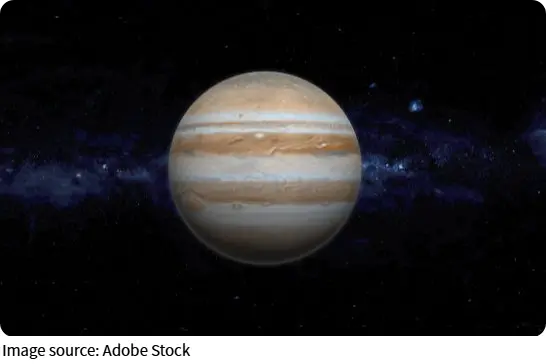
Best Time to Observe the Conjunction
The optimal viewing window begins shortly after sunset, when the Sun has dipped below the horizon and twilight begins to fade. During this period, the western sky still holds enough residual light to reveal Venus first, since it is typically the brightest object after the Sun and Moon.
As the sky gradually darkens, Jupiter becomes easier to spot. It appears slightly higher than Venus in the western direction and shines with a steadier, less piercing glow. The contrast between the two planets becomes more noticeable as darkness deepens. The key timing detail is patience. The best visibility does not occur immediately after sunset but approximately 20 to 60 minutes afterward, when the sky has dimmed enough for both planets to stand out clearly against the twilight background.
Across several days leading up to the peak conjunction, observers will notice a slow but consistent shift. Venus and Jupiter will appear to drift closer each evening, creating a sense of motion that is easy to track with the eye.
Where to Look in the Sky
A clear and unobstructed view of the western horizon is essential. Ideal observation points include open fields, rooftops, beaches, or elevated areas where buildings and trees do not block the low evening sky. The planets will appear relatively low above the horizon, so even small obstructions can interfere with the view. Atmospheric conditions also play a role; haze, humidity, or urban light pollution may reduce clarity, making rural or coastal locations especially favorable.
Venus will be the easiest to identify first due to its intense brightness. Jupiter follows as a slightly dimmer but still prominent point of light nearby. Their proximity becomes increasingly noticeable as the conjunction approaches its peak.
What You Can Expect to See
During the closest approach, the two planets will appear extremely near each other—close enough that they may fit within a single binocular field of view. Although they are separated by vast distances in space, from Earth they appear as a striking pair of luminous points.
Venus typically shows a sharp, white brilliance, while Jupiter appears softer with a warm, golden-white tone. This subtle color difference becomes easier to detect when using binoculars. If viewing conditions are stable and a tripod or steady surface is used, observers may also detect Jupiter’s largest moons as faint, star-like points arranged near the planet. These are part of the Galilean moon system, a reminder that Jupiter itself is a miniature celestial system in motion.
A telescope adds even more detail, though it is not required. Venus may show a partial phase, similar to a small glowing crescent or gibbous shape depending on its position relative to Earth and the Sun.
Viewing Tips for the Best Experience
To fully enjoy the conjunction, preparation matters as much as timing. One of the most important steps is allowing your eyes to adjust to darkness. This process can take around 15 to 20 minutes, during which artificial light exposure should be minimized. Avoid using bright screens or white light just before observing, as this reduces night vision sensitivity. Instead, use dim or red-toned lighting if necessary.
Binoculars can significantly enhance the experience, even basic handheld models. They help bring out fine details and make the two planets appear more dramatic within the same frame. However, stability is crucial—resting elbows on a surface or using a tripod improves clarity.
Weather conditions should also be checked in advance. Clear skies with minimal cloud cover are essential, especially in the western direction where the planets will appear low above the horizon. Finally, consistency is rewarding. Observing the sky over several nights before and after the peak conjunction allows viewers to appreciate the slow celestial motion that creates this alignment in the first place.
The Venus–Jupiter conjunction of 2026 is more than just an astronomical event—it is a reminder of the quiet rhythm of our solar system. Two planets, separated by hundreds of millions of kilometers, briefly come together in a shared line of sight, creating a rare visual encounter that anyone can witness.
It is simple, accessible, and deeply memorable. And on the night when Venus and Jupiter appear closest, the western sky will offer a view that feels almost unreal in its brightness and precision—an invitation not just to observe, but to pause and reconnect with the wider universe above us.